Having just completed a Certificate in English Language Teaching to Adults (CELTA) course through Cambridge University and the International Language Schools of Canada (ILSC), I’m moved to note that, while I’ve dedicated most of my professional life to teaching English, the CELTA course made me more fully aware of how much there is to learn about my own mother tongue. Over a few months’ time, I received wise, skillful teacher training from ILSC’s Camellia Cheriki and Bita Rezaei, who guided my development in preparing and delivering lessons that emphasized speaking—natural speech, conversation—but also ventured into language areas that I’d rarely, if ever, broached in my teaching practice up to that point. I’d never asked a student to define a modal auxiliary verb, for example, or to determine when until functions as a conjunction and when it functions as a preposition. The experience was humbling, intellectually challenging, and fulfilling. I’m given to believe that my actual certificate will be printed at a mint in the U.K. Cool. I’m just happy that I passed the course.
It dawned on me the morning after my final CELTA training session that this month marks 30 years that I’ve been employed as an English teacher in one capacity or another. Those are consecutive years and don’t include 1987, when I was employed not so much as an English teacher as an English speaker by a quirky company in Osaka, Japan, called International Plaza (IP). I hadn’t thought of that gig in years, but it was very much on my mind during the CELTA course.
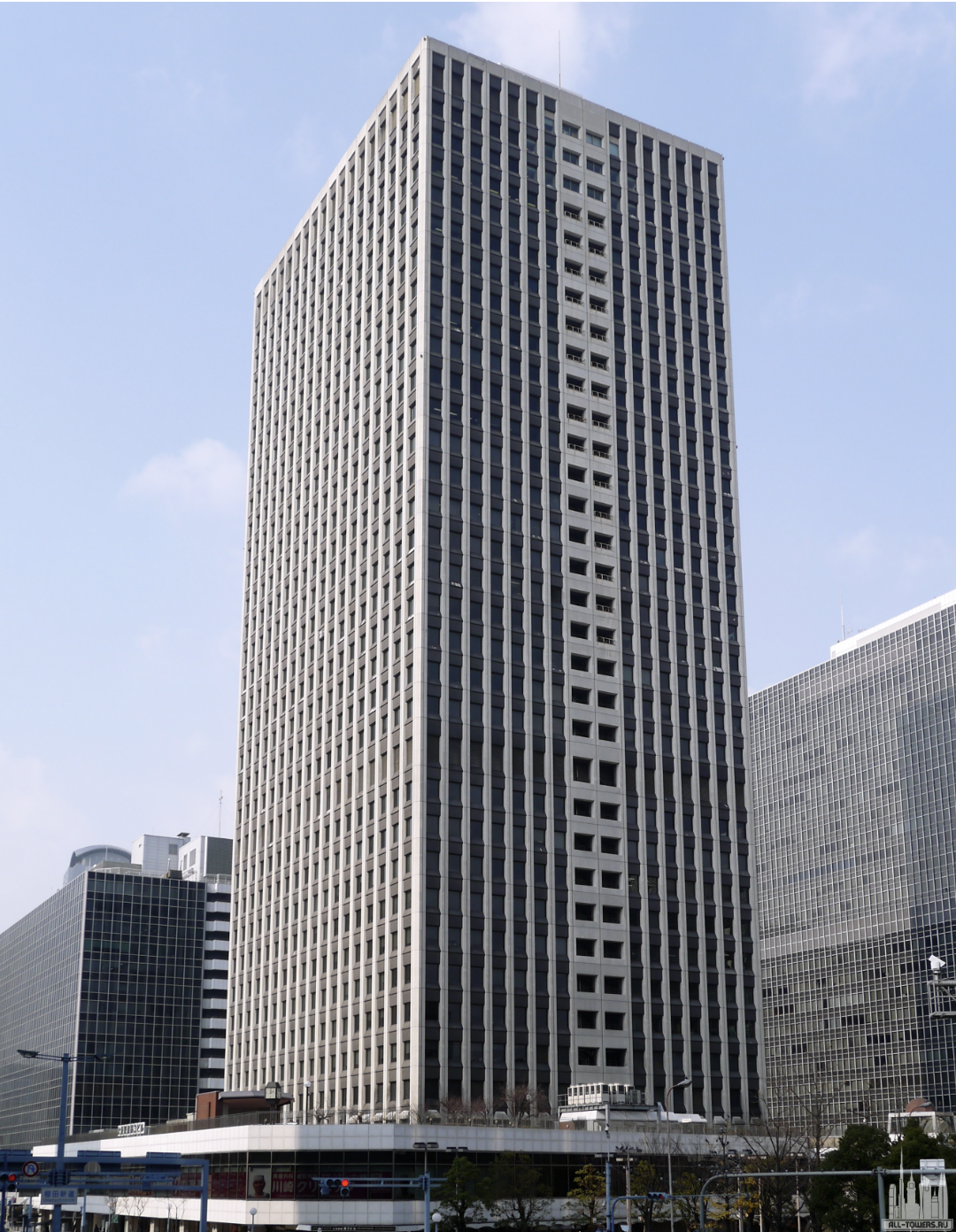
Perched on the 26th floor of a skyscraper known as the Daisan building—the big third building—International Plaza rose, along with the nearby Daiichi and Daini buildings—big first and big second, respectively—from a dense thicket of rail lines, boulevards, and buildings packed so closely together that, from our lofty vantage, the buildings seemed to lean against each other like an Expressionist cityscape: The Business District of Dr. Caligari. IP was more of a club than a school, its services including package tour travel arrangements, a video library and screening rooms, conversational English classes, and something we called Lobby Talk.
Lobby Talk was somewhat self-explanatory: Come into the club, as if into a lobby, and talk with fluent English speakers. Talk about what? Talk about whatever. Safe—which is to say basic— conversation starters included such topics as “What’s your favorite drink?” and “What is your job?” We English-speaking staffers fielded such questions as, “Can you use chopsticks?” and “Do you eat raw fish?” and “Do you like Japan?” The pedagogical underpinnings of Lobby Talk, if one can call them that, emphasized an exchange of small ideas—small talk, in other words—as the foundation upon which club members might build greater fluency. The kind of fluency most Lobby Talk participants seemed to have in mind was itself a higher-level Lobby Talk, such as being able to converse with English speakers whom club members might meet on package tours of Hawaii, the most popular destination in the IP portfolio, or during international trade delegations to Japan. The latter delegates were almost always Americans in those days, which made me, a U.S. national, a popular Lobby Talk partner—no offense to my Canadian peers—in what sometimes felt like an English speaker petting zoo, minus the petting.
In a way, then, my teaching journey has come full circle. While English composition in its myriad forms—academic essays, creative writing, and now digital storytelling—has been the mainstay of my teaching practice, good, old-fashioned conversation has now made its way back into my repertoire. I hadn’t thought of this when I signed up for my CELTA course, but I’m thinking about it now: Maybe I inadvertently made a good career decision in earning a CELTA certificate, especially given the rapid automation of English compositional mechanics. Time will tell. That’s what we call, in the small-talk biz, an idiom.
 Cosmoplastic